

To learn how to steam clean carpets without soaking the padding, first check the carpet’s care instructions, vacuum thoroughly, and use a hot-water extraction machine approved for your carpet. Apply only the recommended amount of solution, follow controlled wet passes with suction-only passes, and dry the floor completely before replacing furniture.
This guide explains how the equipment works, which preparation steps matter, and how to prevent excess water from reaching the padding. A&B Carpet Cleaning also shows Brooklyn homeowners what they can reasonably handle themselves and when professional carpet cleaning may be the more practical choice for their home.
Check Your Carpet and Choose the Right Machine
Most rental machines described as steam cleaners actually use hot-water extraction. They apply water and cleaner, loosen soil, and vacuum dirty liquid into a recovery tank. A vapor steamer releases hot vapor but generally lacks the suction required for whole-room carpet cleaning.
Before starting, confirm that your carpet manufacturer permits the machine and cleaning method. Delicate wool, unstable dyes, loose seams, damaged backing, and existing moisture problems need extra caution. If the carpet or padding is already wet from a leak, address that problem before adding water.
How to Steam Clean Carpet Without Excess Water
The table below shows what each cleaning stage should accomplish and where moisture control matters most.
|
Stage |
What to Do |
Padding Protection |
|
Dry preparation |
Vacuum slowly |
Less dirt turns into wet residue |
|
Spot testing |
Test an inconspicuous patch |
Catch color changes early |
|
Wet cleaning |
Use controlled passes |
Avoid repeated saturation |
|
Extraction |
Make suction-only passes |
Remove excess water |
|
Drying |
Run fans and control humidity |
Limit trapped moisture |
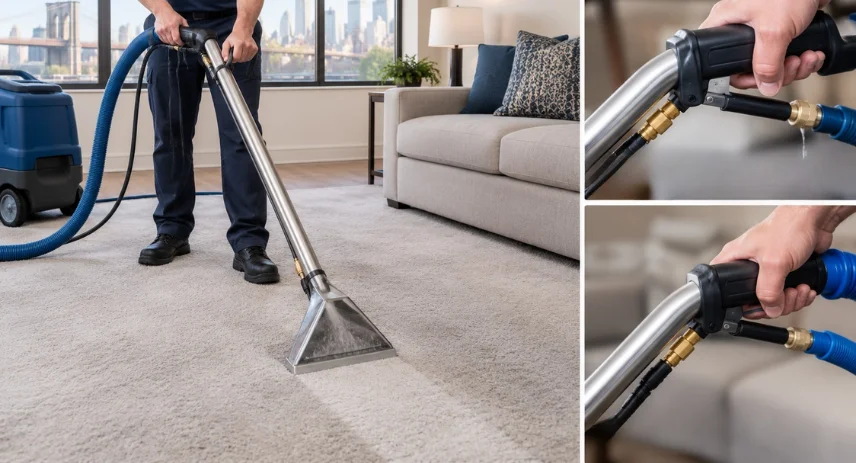
6 Steps for Cleaning Carpet With a Steam Cleaner
These steps explain how to clean carpet with steam cleaner equipment using a typical home extractor. Follow your particular model's manual if its operating sequence differs.
1. Clear the Room and Plan Your Exit
Clear small furniture, toys and loose items. Move heavy furniture if safe to do so. Dust nearby surfaces first so debris does not fall onto the damp carpet. Start at the far corner and finish by the door.
2. Inspection Vacuum & Stains
Vacuum slowly using overlapping strokes, including the baseboards. Dry soil is easier to remove before water reaches it. Pretreat suitable stains only with products approved for the carpet and machine. Test the product in a hidden spot and allow it to dry.
3. Set up the Machine Correctly
Empty and flush out the recovery tank. Fill clean tank with water to level indicated, at temperature indicated in the manual. No more guessing. Measure your approved cleaning solution. Household soap can produce excess foam or leave residue.
4. Make One Controlled Wet Pass
Work in manageable strips, dispensing solution only as the machine instructions direct. Move steadily and overlap adjacent strips slightly. Avoid holding the sprayer over one area. Do not repeatedly wet stubborn spots in an attempt to erase them.
5. Follow With Suction-Only Passes
Release the spray trigger and pass over each cleaned strip again. The New York State Office of General Services recommends turning off the solution dispenser and using vacuum-only passes to extract as much moisture as possible. Drain the dirty water tank before it is full.
6. Dry Before Walking or Moving Furniture
Use fans, air conditioning, or a dehumidifier depending on indoor humidity. Open windows only when outdoor air is comparatively dry. Keep children, pets, and furniture off the carpet until both the surface and deeper layers have dried.
Why the Padding Matters More Than the Surface
A carpet may feel almost dry while water remains underneath. Too many wet passes, bad suction, or a recovery tank that is too full can cause excess moisture around the backing and padding. Returning furniture too early can also slow drying.
The EPA's drying guidance recommends drying wet carpet and backing within 24–48 hours and identifies extraction, fans, and dehumidifiers as useful tools. That guidance concerns unwanted water damage, but it reinforces the importance of prompt drying after routine cleaning.
DIY Carpet Steam Cleaning vs. Professional Service
A rental extractor can work well for a small, compatible room with ordinary soil when you can control the cleaning solution and drying conditions. It also requires moving furniture, emptying tanks, and monitoring how much water the carpet retains.
If your carpet has heavy soiling, recurring stains, large areas, delicate materials or concerns about damp padding, then professional carpet cleaning might be more practical. A technician can assess the carpet and select suitable equipment rather than applying the same method everywhere.
For more home-care information, read our carpet-cleaning guide and carpet-drying guide.
5 Steam-Cleaning Mistakes to Avoid
These five mistakes can leave residue, increase drying time, or affect carpet appearance.
-
Skipping the vacuum: Loose grit becomes harder to extract when mixed with water.
-
Overloading the machine: Using excess detergent can leave a sticky residue that attracts dirt.
-
Multiple wet passes: More isn’t always better with liquid, especially on stains.
-
Ignoring the recovery tank: If the section is reduced, there will be more water left behind.
-
Put furniture back early: A damp carpet can transfer moisture to furniture and slow drying.
When to Stop DIY Cleaning
If the carpet is extremely wet, shows new discoloration, smells musty, or is not improving with proper treatment, stop adding water. Find out if it is a case of trapped moisture or residue or a stain that needs a different tack.
Knowing how to steam clean carpets also means checking water recovery during the job and stopping if suction becomes weak.
Professional Carpet Cleaning Throughout Brooklyn
Knowing how to steam clean a carpet helps with everyday soil, but protecting the padding is just as important as cleaning the pile. A&B Carpet Cleaning assesses carpet condition and cleaning needs before recommending professional treatment.
We serve Brooklyn and surrounding areas. Explore our Brooklyn carpet cleaning service, or call (718) 431-8484 to discuss your carpet and request an estimate.
Frequently Asked Questions
Vacuum first, then controlled wet and section-only passes as per rental manual. Then dry the carpet.
Usually not. A garment steamer lacks the extraction needed for whole-room carpet cleaning.
No. The method of stain removal depends on the type of spill, type of carpet, prior treatment and age of the mark. Specific stains will need individual treatment.
Watch the machine and solution directions. If they call for a clean-water rinse, use the approved setting and follow with additional section-only passes.
Increase airflow, decrease moisture. If padding feels damp, smells musty, or is still damp, have it checked before cleaning again.