

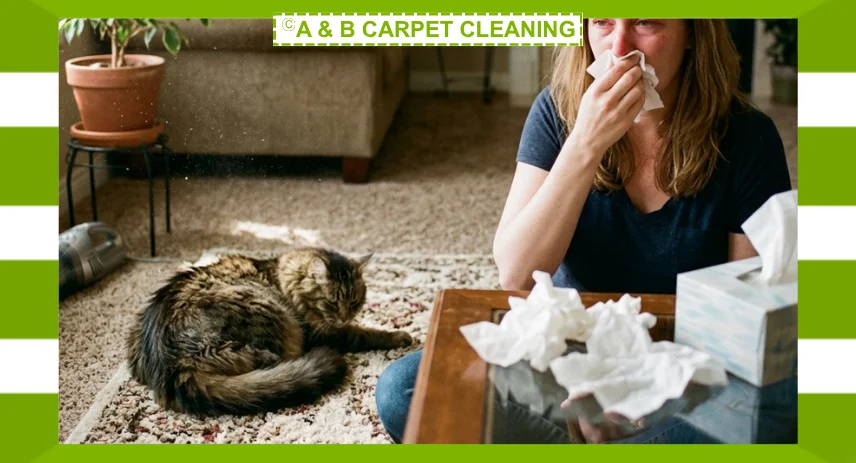
If you notice sneezing, congestion, itchy eyes, coughing, or a runny nose in carpeted rooms, carpet allergy symptoms may be linked to allergens collected in the pile rather than the carpet itself. Dust mite material, pet dander, and pollen can settle into carpet and household dust.
These symptoms can also come from other causes, so carpet alone cannot confirm an allergy. A&B Carpet Cleaning provides this guide to explain the common triggers, what homeowners can do to reduce exposure, and where professional carpet cleaning may fit into a broader allergy-management routine at home.
What Carpet Allergy Symptoms Can Look Like
Carpet allergies is a common search phrase, but the carpet often acts as a reservoir for particles that trigger an allergic response. Mayo Clinic lists sneezing, runny or stuffy nose, itchy or watery eyes, cough, and throat irritation among symptoms linked with airborne allergens such as dust mites, pet dander, and pollen. Mayo Clinic dust mite allergy guidance
If symptoms persist or breathing becomes difficult, seek medical advice rather than relying on cleaning alone.
|
Possible Trigger |
Where It Can Come From |
Commonly Associated Symptoms |
|
Dust mite material |
House dust, bedding, carpet |
Sneezing, congestion, watery eyes, cough |
|
Pet dander |
Skin flakes, saliva carried on hair and dust |
Sneezing, runny nose, itchy eyes, cough |
|
Pollen |
Shoes, clothing, open windows |
Sneezing, congestion, itchy or watery eyes |
Dust Mite Material Can Settle in Carpet
Dust mites thrive in warm, humid indoor areas and can be found in carpeting, bedding, and padded furniture. The trigger comes from proteins in mite waste and body material. Mayo Clinic notes that dust mite allergy can cause sneezing, congestion, watery eyes, coughing, and, in some people with asthma, wheezing or breathing difficulty.
Regular vacuuming and reducing excess indoor humidity can help limit buildup. Carpet cleaning can remove some settled soil and allergen-containing debris, but it should be one part of exposure reduction.
Pet Dander Does Not Stay Beside the Pet
Pet dander consists of tiny skin flakes, while allergy-causing proteins can also be present in saliva and urine. These particles settle onto carpet, clothing, and other surfaces. Mayo Clinic notes that pet-allergy symptoms can include sneezing, nasal congestion, watery eyes, and cough.
Keeping pets out of certain rooms, cleaning bedding, and vacuuming can reduce exposure. Carpet cleaning may lower some dander buildup in the carpet, but it cannot remove allergens continually produced elsewhere.
Pollen Can Follow You Indoors
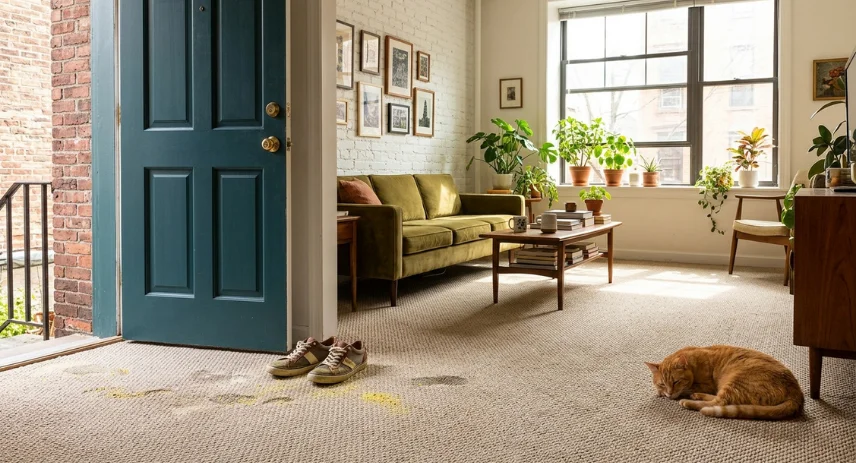
Pollen can enter through open windows and doors or arrive on shoes, clothing, bags, and pets. Once indoors, some particles settle into carpet and household dust.
During high-pollen periods, leave outdoor shoes near the entrance, clean entry mats, vacuum regularly, and keep windows closed when pollen is high.
How to Reduce Allergen Buildup in Carpet at Home
If you want to get rid of carpet allergies, concentrate on reducing exposure rather than expecting one cleaning step to get rid of an allergy.
-
Vacuum regularly: Give extra attention to bedrooms, family rooms, pet areas, and entrances where dust and tracked-in particles collect.
-
Control tracked-in debris: Clean mats and leave outdoor shoes near the door to reduce soil and pollen carried across carpet.
-
Manage pet areas: Wash pet bedding as appropriate and clean nearby surfaces so carpet is not treated as the only source.
-
Keep carpet dry: Address spills and unwanted moisture promptly to avoid added moisture concerns.
-
Clean beyond the floor: Dust on shelves, bedding, curtains, and surfaces can add to the same indoor allergen load.
Does Carpet Cleaning Help With Allergies?
If you are asking does carpet cleaning helps with allergies, the most accurate answer is that carpet cleaning may reduce dust, pollen, pet dander, and other allergen-containing debris held in carpet. It does not treat an allergy or promise symptom improvement.
The American College of Allergy, Asthma & Immunology notes that environmental control can help people with allergies, but reducing one source may not be enough when several triggers are present. Cleaning should support, not replace, medical guidance and whole-home allergen control.
Home Care vs. Professional Carpet Cleaning
Homeowners can vacuum, clean entry mats, care for pet areas and reduce dust on nearby surfaces.
Professional carpet cleaning may be practical when vacuuming no longer removes visible buildup, pet dander has accumulated, or seasonal debris has settled deeply. A professional service addresses the carpet itself. It cannot diagnose allergy symptoms or control every allergen source in the home.
For more detail, read our guide on how carpet cleaning can reduce allergen buildup or visit our Brooklyn carpet cleaning service.
How Does Carpet Cleaning Reduce Allergies?
The phrase how does carpet cleaning reduce allergies can be misleading because cleaning does not reduce the allergic condition itself. It can remove part of the settled material that may contain dust mite debris, pet dander, pollen, and ordinary soil.
Extraction and controlled rinsing can remove material that household vacuuming may leave behind. The goal is a cleaner carpet with less accumulated debris, not a promise of symptom relief. Continued home care and medical guidance remain important.
When Symptoms Need More Than Carpet Care
Do not assume that symptoms occurring at home prove the carpet is responsible. Allergens can also be present in bedding, pets, curtains, and outdoor air.
Seek medical attention if you develop severe symptoms, such as worsening wheezing or shortness of breath, says Mayo Clinic. Carpet cleaning has to do with the cleanliness of the carpet; health care providers determine if the symptoms are allergic and what treatment or avoidance measures are appropriate.
Reduce Carpet Buildup With Professional Cleaning in Brooklyn
If routine vacuuming is not removing visible dust, pet debris, or seasonal buildup, A&B Carpet Cleaning can provide deeper carpet cleaning in Brooklyn. We focus on carpet condition and cleaning needs rather than making medical promises.
Professional cleaning can support a broader overall home-care routine by removing accumulated debris from carpeted areas. Visit our Brooklyn carpet cleaning service or call (718) 431-8484 to discuss cleaning for carpeted rooms and pet areas.
Frequently Asked Questions
That’s right. If the allergen is concentrated in one room, symptoms may appear worse in that room but location alone cannot determine the cause.
Some people are sensitive to materials or smells, some are sensitive to dust or indoor particles. A health care professional can find the cause.
Nope. Allergens also accumulate in bedding, furniture, pets, curtains and household dust so removing carpet won't get rid of all the triggers.
Yes. Pollen tracked in becomes a part of the dust and carpet in a home, so cleaning and controlling access to the home still helps after the peak times.
See a doctor if symptoms persist, are difficult to explain or disrupt daily life. Wheezing or shortness of breath that gets worse should be evaluated.