
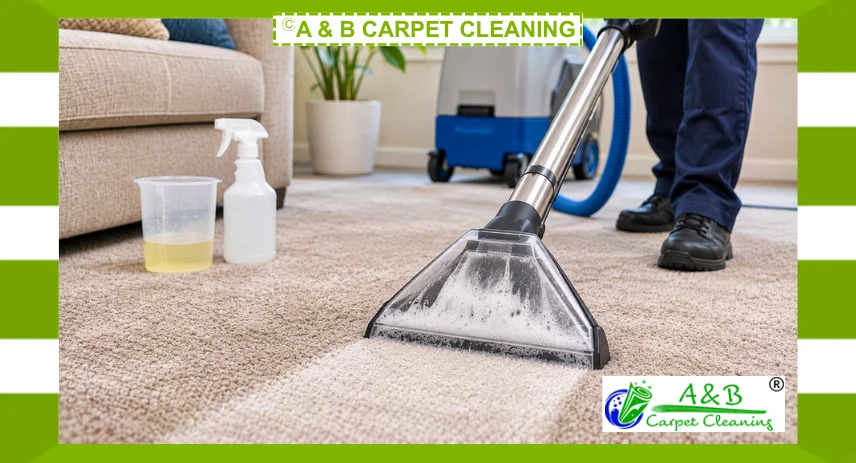
To understand how to sanitize carpet at home, start by cleaning first, then decide whether sanitizing is actually needed. Vacuum thoroughly, treat visible soil with a carpet-safe cleaner, and only use a sanitizer if its label specifically allows use on carpet or other soft surfaces. Vinegar, baking soda, and plain steam may help with cleaning or odor control, but they should not automatically be described as disinfectants.
A&B Carpet Cleaning created this guide for Brooklyn homeowners who want a method, product limits, and a way to decide when routine cleaning is enough and when professional carpet care may help.
Cleaning, Sanitizing, and Disinfecting Are Different
Cleaning removes dirt and many germs from a surface. Sanitizing reduces certain germs to levels considered acceptable under the product’s tested use. Disinfecting makes a stronger germ-killing claim and requires a product approved for that purpose.
The U.S. Environmental Protection Agency explains that sanitizers and disinfectants are regulated based on specific tested claims. The product label tells you which surfaces, organisms, application method, and contact time are covered.
|
Goal |
What it Means |
Practical Carpet Approach |
|
Cleaning |
Removes dirt and many germs |
Vacuum and use a carpet-safe cleaner |
|
Sanitizing |
Reduces specific germs under tested conditions |
Use a carpet-labeled sanitizer |
|
Disinfecting |
Targets broader germ claims |
Use only a product labeled for soft surfaces |
|
Deodorizing |
Reduces or masks odor |
Address the odor source first |
How to Sanitize Carpet at Home Step by Step
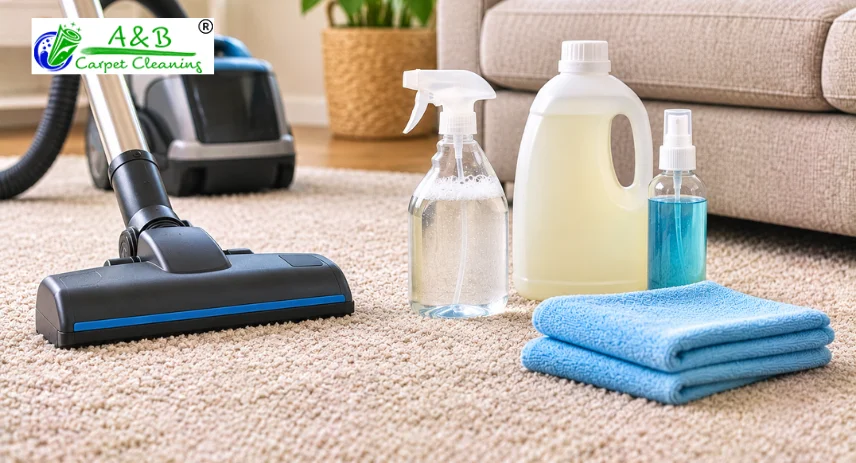
The safest process is to clean first and add a sanitizing step only when the product and situation call for it.
1. Vacuum Thoroughly
First take out any soil, small pieces of food, pet hair and dust. Then add water. Move the vacuum cleaner slowly across the floor making sure each area is covered in overlapping sections. Use the edge tool near the walls and, in the corners.
2. Treat Visible Soil and Spills
Use a carpet cleaner made for your carpet type and follow the directions. Blot fresh spills, don't scrub them outwards. If the carpet has an unknown material, unstable color, or previous damage, test the cleaner in a hidden area before treating a larger section.
3. Decide Whether Sanitizing Is Necessary
The CDC’s home-cleaning guidance notes that regular cleaning is usually enough in many homes unless someone is sick or there is another reason for added germ control. For carpet and rugs, CDC guidance emphasizes vacuuming and cleaning with products appropriate for soft surfaces.
4. Read the Sanitizer Label Before Applying It
If you have to sanitize carpet, select a product that is labeled for use on carpet or other soft surfaces. Follow the instructions for dilution, amount of application, contact time, ventilation and drying time. Don't assume a product that works on countertops will work on carpet.
5. Let the Carpet Dry Completely
Use fans, air conditioning, or a dehumidifier if needed. Keep people and pets off the treated area until the label’s directions are complete and the carpet is dry. Avoid replacing furniture on damp carpet.
Can You Disinfect Carpet Naturally?
When people search how to naturally disinfect carpet they often find advice about vinegar, baking soda, essential oils or homemade mixtures. They might help with day-to-day clean or odor control in some cases, but that doesn’t make them certified disinfectants for carpet.
A true disinfection claim depends on a tested product, a listed surface, the target organism, and the required contact time. If your goal is everyday cleanliness rather than a specific disinfection need, vacuuming, prompt spill cleanup, and proper carpet cleaning are more defensible than calling an untested home mixture a disinfectant.
What About Steam Cleaning?
Hot-water extraction can remove embedded soil and rinse away residue when the carpet is suitable for the method. A steam or extraction machine should still be used according to the carpet and equipment instructions.
Heat alone should not be described as proof of sanitization unless the machine has a validated sanitizing claim for that exact use. If the goal is simply a deeper clean, focus on soil removal, extraction, and complete drying rather than making a germ-killing promise the equipment cannot support.
Home Carpet Sanitizing vs. Professional Cleaning
Home care works well for routine vacuuming, fresh spills, soil, and use of a correctly labeled carpet sanitizer. You control the product and can stop if the carpet changes color or becomes overly wet.
When carpet has a heavy buildup, a recurring odor, pet contamination, several rooms that are affected or previous products that have left residue, professional carpet cleaning may be more practical. A professional can assess the carpet condition before choosing a cleaning method.
For related home care, read our guide to cleaning carpet at home. For deeper service, visit our Brooklyn carpet cleaning page.
5 Carpet Sanitization and Disinfecting Mistakes to Avoid
These mistakes can create residue, excess moisture, or unsupported germ-control claims.
-
Skipping the cleaning step: Dirt can interfere with products that need direct surface contact.
-
Using the wrong surface label: A hard-surface sanitizer is not automatically suitable for carpet.
-
Contact time not followed: A sanitizer will only perform as it is labeled if the conditions of application are followed.
-
Mixing household products: You can ruin carpet or create unsafe exposure by mixing cleaners.
-
Overwetting the carpet: Extra liquid can move into the backing and extend drying time.
When Routine Cleaning Is Usually Enough
You do not need to sanitize carpet every time you vacuum.
If you are learning how to sanitize carpets after ordinary daily use, first ask what problem you are trying to solve. Visible dirt needs cleaning. Odor needs its source addressed. A specific sanitizing or disinfecting goal needs a product labeled for that purpose.
Professional Carpet Cleaning Across Brooklyn
A&B Carpet Cleaning helps Brooklyn homeowners address embedded soil, recurring spots, pet-related buildup, and carpets that need more than routine vacuuming. We assess the carpet before selecting the right cleaning method, not using the same method for all situations.
We service Brooklyn and surrounding areas. Stop by one of our service areas or give us a call (718) 431-8484 to talk about professional carpet cleaning for your home or office.
Frequently Asked Questions
Baking soda can take in smells. Help remove hard residue but it is not a proven carpet sanitizer unless the label, on a tested product says it is.
Vinegar can help with some household cleaning tasks. It is not a substitute, for a product that has a verified carpet disinfecting claim.
Clean the area promptly and address the contamination source. If sanitizing is needed sanitizing must use a product specifically labeled for that carpet application.
Only make a sanitizing claim if the machine manufacturer validates that use. Otherwise, treat steam as a cleaning method.
There is no one-size-fits-all schedule. Regular cleaning is usually more important while disinfecting should be done based on the situation the condition of the carpet and the instructions, on the product.