

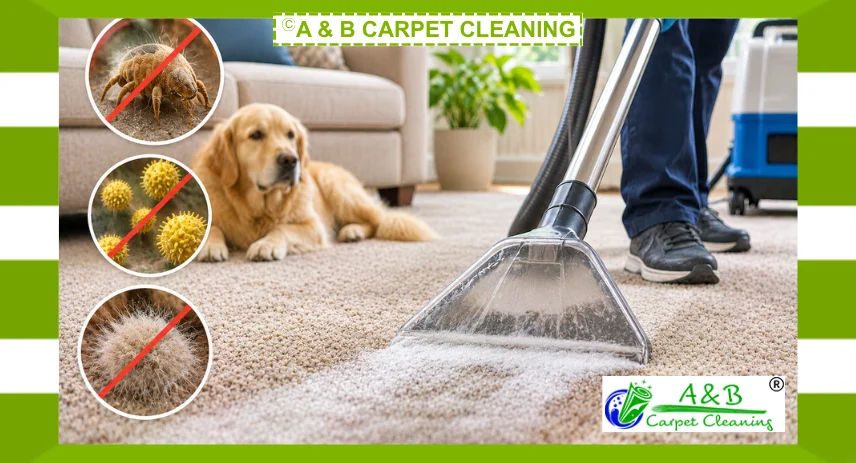
Allergy-relief carpet cleaning starts with removal of settled dust, pet dander, pollen and other debris, not just removing smell from the surface. Use a good filtered vacuum cleaner, clean high traffic areas regularly, clean spills immediately and consider hiring a professional to remove accumulated dirt. After wet cleaning, make sure the carpet is dried completely.
Carpet cleaning may reduce allergen-containing particles, but it cannot diagnose allergies or promise symptom relief. A&B Carpet Cleaning explains which steps you can handle at home, which ones need extra care, and how professional carpet cleaning fits into a household allergen-control plan for Brooklyn residents.
What Does Carpet Cleaning Actually Remove?
Carpets can collect dust-mite waste, pet dander, tracked-in pollen, and ordinary dirt. Walking across the pile or vacuuming can stir some settled particles back into the air. Removing accumulated soil can reduce a source of exposure, although allergens also remain in bedding, furniture, pets, and outdoor air.
The U.S. Environmental Protection Agency recommends regular carpet vacuuming and damp dusting to reduce indoor particles. It also notes that sensitive people may prefer to stay away while vacuuming takes place.
Match the Cleaning Method to the Allergen Problem
The table compares carpet concerns, cleaning steps, and limits.
|
What collects in carpet |
Useful home action |
What cleaning cannot do |
|
Dust-mite debris |
Regular filtered vacuuming |
Eliminate mites from the entire home |
|
Pet dander |
Vacuum pet-used rooms and nearby surfaces |
Stop pets producing allergens |
|
Tracked-in pollen |
Maintain entrance mats and vacuum |
Prevent all outdoor pollen entering |
|
Embedded soil |
Consider suitable deep cleaning |
Treat the underlying allergy |
|
Dampness or musty odor |
Find and correct the moisture source |
Make water damage safe by spraying cleaner |
Follow a Practical Carpet-Care Routine
Vacuum Regularly Without Stirring Up Extra Dust
Vacuum slowly in overlapping passes, especially around sofa edges, bedrooms, pet-resting areas, and entrances. A vacuum designed to retain fine particles helps avoid sending collected dust back into the room. Empty its container according to the maker's directions, preferably away from sensitive occupants.
Remove Tracked-In Soil Before It Spreads
Use entrance mats and leave outdoor shoes near the door. Pollen and grit arriving on footwear can settle throughout carpeted rooms. Preventing buildup reduces the work needed later.
Clean Surrounding Surfaces Too
Damp-dust shelves, clean pet bedding, and keep frequently touched household surfaces free of dust. If you clean only the carpet while nearby surfaces remain dusty, particles can settle onto the floor again.
Control Moisture After Deep Cleaning
Follow carpet and equipment care instructions. Use extraction rather than repeated wet passes, then improve airflow and control humidity. An overly wet carpet can create a separate moisture problem rather than improve the room.
Can You Be Allergic to Carpet Itself?
Carpet itself is not always the cause of an allergic reaction. Dust mites, pet dander and pollen can build up deep in carpet fibers, causing sneezing, nasal congestion, coughing or itchy eyes in sensitive people. Some people may also be sensitive to certain carpet materials or cleaning products may cause irritation. If symptoms continue, an allergist can help identify the actual cause.
Sneezing, itchy eyes, congestion and cough may occur for many reasons. Our guide to carpet allergy symptoms explains these possible triggers without treating symptoms as proof of a particular carpet problem.
Can Professional Cleaning Help More Than Vacuuming?
Routine vacuuming helps remove dry surface soil. Professional hot-water extraction, when suitable for the carpet, can remove additional embedded debris through controlled washing and recovery. Neither method removes every allergen or prevents new particles from arriving.
Regular vacuuming removes loose dirt and dust, but pet dander, pollen and other particles can remain trapped deeper in carpet fibers. Professional carpet cleaning can help remove this buildup, especially in busy rooms and homes with pets. For better allergen reduction, combine carpet cleaning with regular care of bedding, furniture and other surfaces where dust collects.
How to Get Rid of Carpet Allergies: What Cleaning Can and Cannot Do
If you would like to know how to get rid of carpet allergies, you should begin by reducing your exposure to dust mites, pet dander and pollen that get trapped in carpet fibers. Regular vacuuming and periodic deep cleaning can help remove allergen build-up, but cannot treat the underlying allergy. Persistent symptoms should be discussed with an allergist..
The American College of Allergy, Asthma & Immunology recommends reducing exposure across the home, including bedding and dust-mite reservoirs. For severe dust-mite sensitivity, discussing alternatives to bedroom carpeting may be reasonable.
Five Mistakes That Undermine Allergen Control
These mistakes can undo otherwise useful cleaning work.
-
Using Fragrance As A Substitute: Pleasant smells do not show that dust or allergen-containing debris was removed.
-
Vacuuming Only Visible Dirt: Fine particles can build up before the carpet looks soiled.
-
Overwetting During Treatment: Excess moisture can reach padding and prolong drying.
-
Ignoring Bedding And Furniture: These surfaces can hold the same allergen sources as carpet.
-
Expecting Symptom Relief Automatically: Cleaning may reduce exposure, but symptoms need medical assessment.
When Deeper Cleaning Is Worth Considering
Here are a few signs that it might be time to consider a deeper cleaning. If your carpet feels gritty after vacuuming, if the carpet in the areas your pets use looks visibly soiled, or if several rooms seem to have built up seasonal debris. If the carpet is musty or stays damp, check for moisture before scheduling routine wet cleaning.
The relationship between carpet cleaning and allergies depends on the whole indoor environment. Cleaning should support other exposure-control steps, not replace them.
Professional Carpet Cleaning for Brooklyn Homes
A&B Carpet Cleaning helps homeowners, address embedded soil and carpet buildup using methods selected for the carpet's condition. We do not diagnose allergies or promise that a cleaning session will stop symptoms.
For carpeted rooms that need more than routine upkeep, visit our Brooklyn carpet cleaning service or call (718) 431-8484. We serve Brooklyn and surrounding areas and can discuss an estimate for your cleaning needs.
Frequently Asked Questions
Cleaning can remove pollen that has been brought in on shoes and pets. Regular vacuuming and entryway rugs help cut down on build-up between deep cleanings.
Vacuuming can briefly disturb settled particles. People sensitive to dust may leave the room while airborne debris has time to settle.
Yes, many allergens are microscopic. It may look clean but it is better to vacuum and clean your carpet regularly.
Not always. That depends on the person's triggers, the state of the carpet and medical advice. Some people do better without carpet in bedrooms.
Indoor problems can be made worse by excess moisture and slow drying. Before you begin cleaning, be sure any existing leaks are stopped, the area is dried thoroughly and the correct extraction method is used.