

First vacuum loose dirt and crumbs from the leather sofa to be cleaned. Dampen a soft cloth with water or a cleaner approved for that type of leather and wipe the surface gently. Work in small sections, don’t soak the surface, wipe off any residue and let the sofa air-dry naturally. Condition the leather only if the manufacturer recommends it.
If you are asking how can I clean leather sofa surfaces without drying them out, these controlled steps are safer than heavy scrubbing or using random household products. A&B Carpet Cleaning created this guide to explain proper leather sofa cleaning, common mistakes, suitable home-care methods, and when professional furniture care may be more practical.
Check the Leather Type Before Adding Moisture
Good leather sofa cleaning begins before the first wipe. Look underneath a cushion or along the frame for the maker’s care label and product instructions. Protected or pigmented leather usually has a surface finish that gives it more resistance to light moisture. Aniline and semi-aniline leather are more absorbent, while suede and nubuck should not be treated like smooth finished leather.
If you cannot identify the leather, keep home care dry and gentle until you have reliable instructions. Test products on a hidden area before cleaning. Let it dry.
|
Sofa condition |
Safer first step at home |
When to stop |
|
Surface dust |
Dry microfiber cloth |
Surface changes |
|
Crumbs in seams |
Soft vacuum attachment |
Tool marks leather |
|
Light soil on finished leather |
Leather-safe cleaner on cloth |
Color transfers |
|
Fresh liquid spill |
Blot with dry white cloth |
Mark spreads |
|
Unknown leather type |
Dry care only |
Moisture is required |
Remove Dust and Crumbs Before Wiping
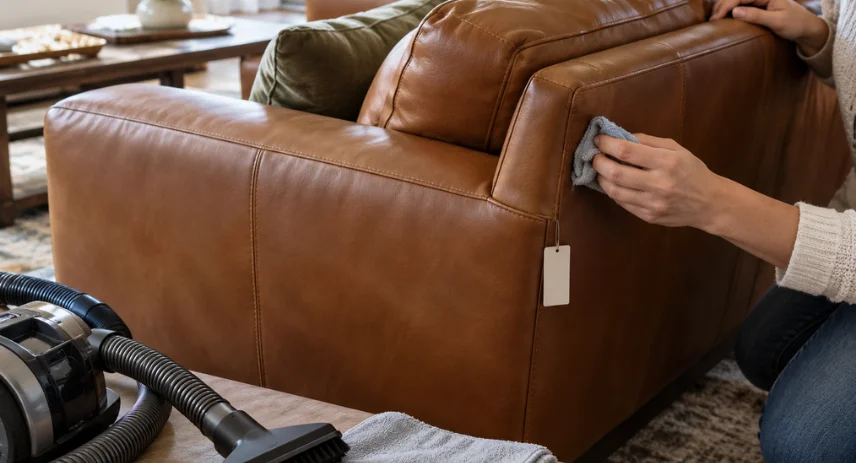
Start cleaning a leather sofa by removing dry debris. Take off loose cushions if the design allows it, then wipe the surface with a clean, dry microfiber cloth. Use a soft vacuum attachment for seams, tufted sections, and cushion gaps.
Work gently from the top down. Do not drag a hard nozzle across the leather because grit left on the surface can be rubbed across the finish during damp cleaning.
Use a Leather-Safe Cleaner in Small Sections
If the manufacturer permits damp cleaning, apply the approved cleaner to a soft cloth rather than directly to the sofa. The cloth should be lightly damp, not dripping. Work on one small section at a time using light pressure, then remove remaining product as directed.
People searching how can i clean my leather sofa often want one homemade mixture, but leather finishes vary too much for a single recipe to suit every sofa. Manufacturer instructions should take priority.
How to Wash a Leather Sofa Without Soaking It
If you are searching how to wash a leather sofa, think controlled wiping rather than washing with lots of water. Leather can absorb moisture, and excess water may leave darkening, stiffness, or uneven drying on some finishes.
For finished leather that allows damp care, use a lightly damp cloth and the recommended product. Keep seams and cushion edges from becoming saturated. Follow with a dry cloth and let the sofa air dry away from strong heat or direct sun.
Blot Spills Before They Spread
Fresh liquid should be addressed quickly with a clean, dry white cloth. Press and lift rather than rubbing. If residue remains, check the sofa maker’s instructions before moving to another product.
Grease, ink, food, and dye transfer do not always need the same treatment. If a mark is old, large, or changing the leather color, stop experimenting before the affected area grows.
Home Cleaning vs. Professional Leather Furniture Care
Home care works best for dust, crumbs, light surface soil, and small fresh spills when the leather type is known. You control the moisture and can stop if the surface changes.
Professional care may be more practical when the leather type is uncertain, soil is concentrated on headrests and armrests, a stain has set, or previous products left a sticky or uneven finish. Inspection should come before treatment.
For related furniture care, browse our Brooklyn cleaning guides. You can also review our Brooklyn upholstery cleaning service.
Avoid These 5 Leather Sofa Cleaning Mistakes
These mistakes can turn a small cleaning job into visible surface damage.
-
Skipping the care label: Leather type and finish determine suitable products and moisture levels.
-
Soaking the surface: More water does not mean better cleaning and can create uneven drying.
-
Scrubbing a stubborn mark: Hard friction can alter sheen, color, or surface texture.
-
Using all-purpose sprays: A general household cleaner may not suit leather furniture.
-
Conditioning without instructions: Use conditioner only when the sofa maker recommends it for that leather.
Keep a Clean Leather Sofa From Getting Dirty Quickly
Once you clean leather sofa surfaces, simple maintenance reduces how often deeper care is needed. Dust with a dry microfiber cloth, vacuum seams with a soft attachment, and blot spills promptly. Keep the sofa away from strong heat and prolonged direct sunlight where practical.
The Smithsonian Museum Conservation Institute notes that leather care depends on how leather was processed and that some traditional dressings have drawbacks. Its guidance is for collection care, not household sofas, but it supports avoiding one-size-fits-all treatments.
When Home Cleaning Should Stop
Stop if color transfers to your cloth, the leather darkens unevenly, the surface becomes tacky, or you cannot identify the finish. Cracked areas, set-in dye transfer, old grease marks, suede, and nubuck also need more caution than routine wiping.
At that point, professional inspection is more sensible than trying several products in the same area.
Need Help With Leather Furniture in Brooklyn?
If routine wiping no longer improves your sofa, A&B Carpet Cleaning can assess leather furniture and determine whether professional care is appropriate. We focus on sofas, chairs, and other leather upholstery, not clothing, bags, or vehicle interiors.
We serve Brooklyn and surrounding areas. Visit our service area or call (718) 431-8484 to discuss cleaning needs for leather furniture in your home or business.
Frequently Asked Questions
Use dish soap only if the sofa maker allows it. Finished leather may tolerate a mild solution, but other leather types can react differently.
A barely damp cloth may suit finished leather. Avoid soaking surfaces, and follow the manufacturer’s care instructions before adding moisture.
Conditioning depends on the leather type. Use only a conditioner intended for that sofa after the surface is fully dry.
Moisture may cause a temporary darkening but color change can be a sign of over-wetting or finish damage. Do not clean the surface until it has been evaluated.
Dust and vacuum as needed then plan for deeper cleaning based on soil level, use and manufacturer guidance.