

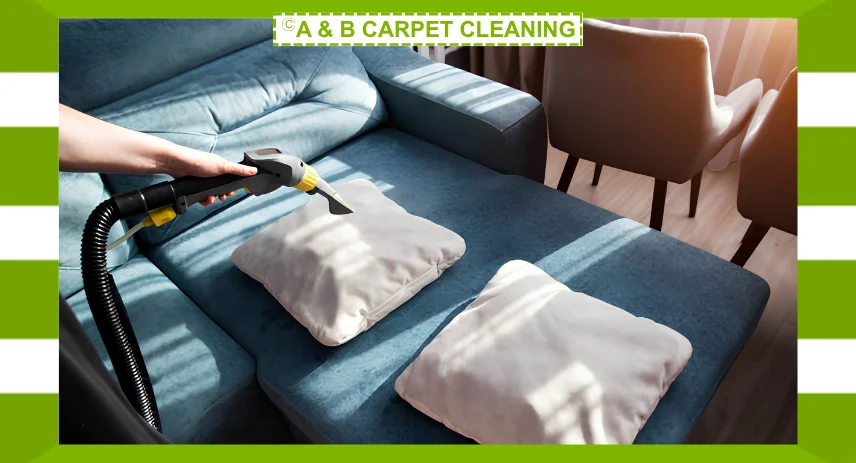
To steam clean a sofa safely, first vacuum the surface, check the care label, test a hidden area, then use an upholstery steam attachment in light, controlled passes without soaking the cushions. If you are learning how to steam clean a sofa, moisture control is the most important step because excess heat and dampness can affect some upholstery materials. Work in small sections, keep the tool moving, and allow each treated area to dry fully before using the sofa again.
A&B Carpet Cleaning created this guide for Brooklyn homeowners who want a safer method. We explain which sofas may be suitable, how to control moisture, what mistakes to avoid, and when professional upholstery cleaning may be the practical choice.
Can I Steam Clean My Sofa?
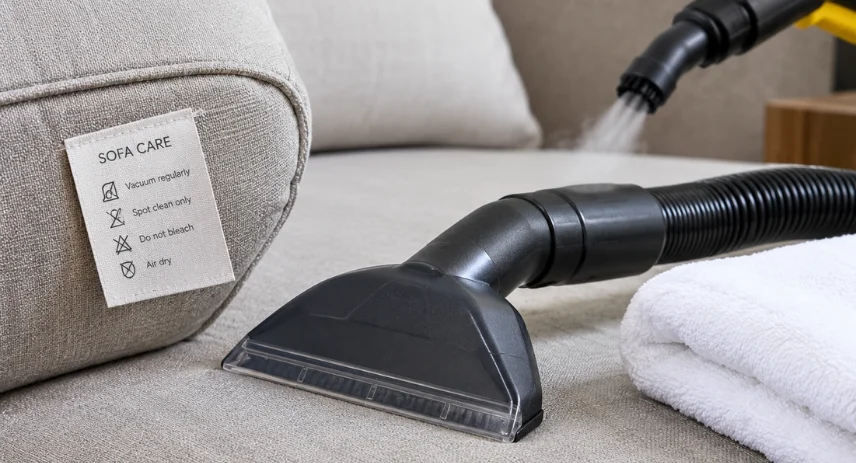
The answer depends on the care code, construction, and maker instructions. A W code generally allows some water-based cleaning, while S means a water-free method, W/S permits either category, and X calls for vacuuming or light brushing.
W does not automatically mean steam is approved. Virginia Tech guidance on upholstery care explains that these codes indicate cleaning categories and recommends testing a small area first. Follow the sofa maker and steam-cleaner manual before proceeding.
|
Care code |
General meaning |
DIY steam decision |
|
W |
Water-based cleaning may be allowed |
Check maker instructions before steaming |
|
S |
Water-free method |
Do not use home steam |
|
W/S |
Water-based or water-free method may be allowed |
Confirm steam approval first |
|
X |
Vacuum or light brushing |
Do not use home steam |
Prepare the Sofa Before Adding Steam
Good steam cleaning a sofa starts with dry preparation. Remove throws and loose cushions if the construction allows it. Vacuum the seats, back, arms, seams, edges, and spaces below removable cushions.
Dry soil should come out before moisture is introduced. Inspect stains, worn areas, loose stitching, existing rings, and color changes before deciding whether home steaming is appropriate.
How to Clean a Sofa With a Steam Cleaner in 6 Steps
Use these steps only after confirming that both the sofa maker and machine instructions permit steam.
1. Test a Hidden Area
Choose a hidden section. Make one pass, blot with a white towel, and let it dry. Stop if you see color transfer, shrinkage, stiffness, rings, or a change in texture.
2. Fill and Set Up the Machine
Check the steam-cleaner manual for water type, attachments, temperature and settings. Add no cleaners unless the machine instructions allow them.
3. Work in Small Sections
Keep the upholstery tool moving instead of holding it over one spot. Use controlled, overlapping passes and avoid repeatedly steaming an area because a mark remains.
4. Keep Cushion Filling as Dry as Possible
The surface should not become soaked. Excess moisture can travel into the filling and lengthen drying. If a section feels very wet, stop and blot with a clean white towel.
5. Treat Stains Separately
Steam is not a universal stain remover. Different jobs require different treatment: food, grease, ink, pet accidents and dye transfer. Or use a method that the sofa instructions permit instead of applying heat over and over.
6. Let the Sofa Dry Completely
If the weather allows, open windows and use fans to move the air around. Keep cushions separated where practical and avoid using the sofa until treated areas feel fully dry.
How to Steam Clean Sofa Cushions Without Overwetting Them
The phrase how to steam clean sofa cushions sounds simple, but moisture control matters most around the filling. Clean one side at a time and avoid saturating seams, zippers, piping, and edges.
If cushions are removable, position them so air can circulate during drying. Do not stack damp cushions. If the covering cannot be removed or the filling is absorbent, use fewer controlled passes.
Home Steam Cleaning vs. Professional Upholstery Cleaning
Home steaming may suit a compatible sofa with light general soil when the care instructions allow the method. You can vacuum, test a hidden spot, make controlled passes, and watch moisture.
Professional cleaning may be more practical when the sofa material is unknown, several cushions are heavily soiled, stains need separate treatment, previous cleaning created rings, or moisture reached the filling. A professional can inspect the construction before choosing a method.
For more furniture-care information, browse our Brooklyn cleaning blog. See our Brooklyn upholstery cleaning service.
Avoid These 5 Sofa Steam-Cleaning Mistakes
These mistakes can increase moisture, leave uneven results, or affect the sofa surface.
-
Assuming W means steam-safe: Water-based cleaning permission does not automatically approve high heat.
-
Skipping dry vacuuming: Remove loose soil before steam introduces moisture.
-
Holding the tool still: Concentrated heat and dampness can affect color, texture, or drying.
-
Going over stains repeatedly: More steam may drive moisture deeper into the cushion.
-
Using the sofa while damp: Pressure on wet areas can slow drying and leave uneven marks.
When You Should Not Steam Clean Sofa Surfaces at Home
Do not steam clean sofa sections if the label calls for S or X care, the maker excludes steam, the covering is unknown, or your hidden test changes the surface. Delicate, antique, damaged, or heavily stained upholstery also deserves extra caution.
If you are asking can I steam clean my sofa because it has an odor, deep stain, or water mark, steaming may not address the problem. An inspection can determine whether extraction, low-moisture cleaning, spot treatment, or another approach is more appropriate.
Need Deeper Sofa Cleaning in Brooklyn?
Knowing how to steam clean a sofa helps with compatible upholstery, but the method should not be forced onto a sofa that does not suit heat or moisture. A&B Carpet Cleaning will evaluate the sofa’s condition, any prior treatment, level of soiling and care requirements, then choose the professional method to use.
We serve Brooklyn and surrounding areas. Visit our service areas or call (718) 431-8484 if routine home care is no longer enough for your sofa.
Frequently Asked Questions
A garment steamer may refresh surfaces, but it does not extract loosened soil. Check the instructions and test a hidden area.
Yes, before adding moisture, you vacuum up crumbs, hair and dry soil to help keep loose debris from becoming a damp residue.
Steam can help to loosen dirt, but stains such as grease, ink, pet accidents and dye transfer will need stain specific treatment as directed in the sofa care instructions. None
Drying time varies with moisture, cushion construction, airflow, humidity, and conditions. Do not use or stack cushions until treated areas are dry.
Yes, excess moisture, uneven passes, unsuitable upholstery or slow drying can all cause rings. A hidden test can catch problems before cleaning.