

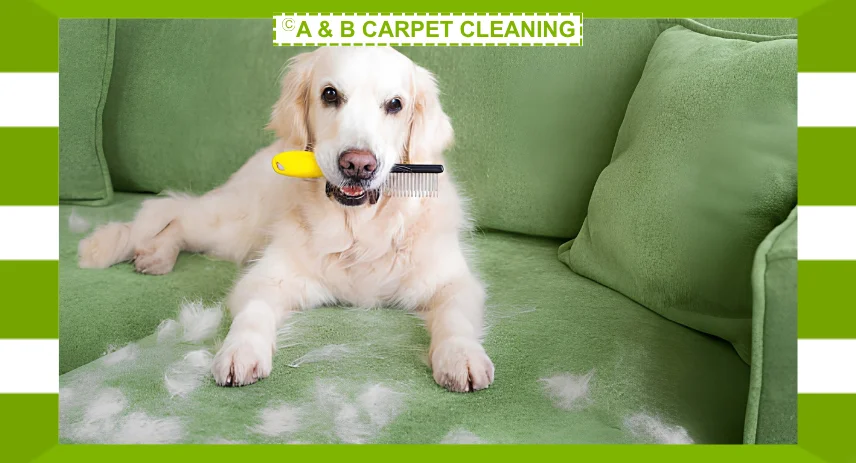
If you are learning how to get dog hair off couch surfaces, start by matching the tool to where the hair is sitting. A vacuum works well for loose hair, while a rubber glove or reusable hair tool can gather strands that cling tightly to cushions. Seams and gaps usually need a crevice attachment.
Dog hair removal gets harder when shedding, static, body oils, and everyday use combine. A&B Carpet Cleaning provides this guide so Brooklyn homeowners can choose a home method, avoid unnecessary damage, and recognize when deeper upholstery cleaning may be useful after loose hair is removed.
Why Dog Hair Can Stay on a Couch After Vacuuming
Short, stiff strands can catch in a tight weave, while longer hair may wrap around seams or press into cushion edges. Static can also make light hair cling after a quick vacuum pass.
That is why how to get dog hair out of couch surfaces is a tool-selection problem. Start with the least aggressive dry method. If one tool is not lifting the hair, change methods instead of pressing harder or scraping repeatedly.
Match the Method to Where the Hair Is Stuck
The table below shows which removal method works best for each type of dog hair buildup.
|
Hair problem |
Best first method |
Follow-up |
|
Loose hair |
Upholstery vacuum attachment |
Lint roller |
|
Clinging hair |
Rubber glove or rubber tool |
Vacuum |
|
Hair in seams |
Crevice attachment |
Soft brush |
|
Removable covers |
Vacuum first |
Follow care label |
|
Hair mixed with soil |
Dry removal first |
Deeper cleaning if needed |
Start With a Vacuum for Loose Hair
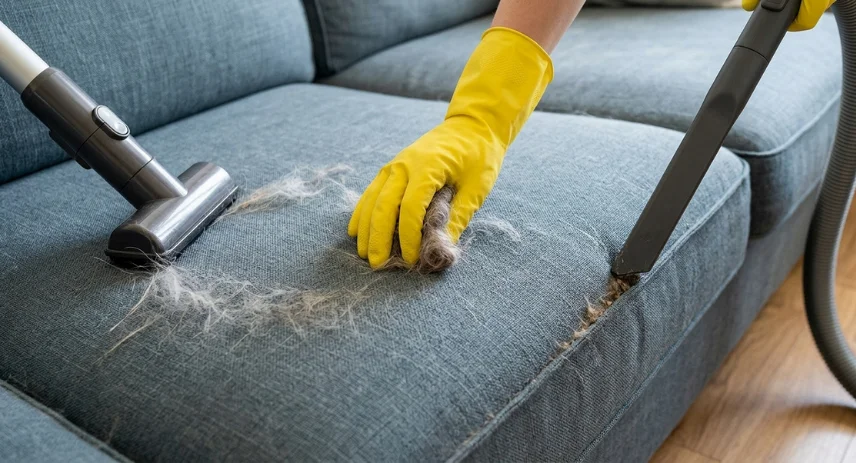
Remove pillows and loose cushions. Vacuum the seat, back, arms, cushion sides, and exposed platform with an upholstery attachment. Work slowly so suction can collect strands instead of pushing them around.
Change direction where hair lies flat, then use a crevice tool along piping, seams, and cushion gaps. This is often the simplest answer to how do I get dog hair off my couch when most shedding remains near the surface. If hair still clings, switch tools instead of increasing pressure.
Use a Rubber Glove for Clinging Hair
A clean rubber glove can gather stubborn strands into small rolls. Move your gloved hand in one direction across a small section, collect the hair, then repeat.
Start with a dry glove. If the couch care instructions allow light moisture, a barely damp glove may improve grip. Test a hidden spot first. This method can clean dog hair from couch cushions without repeatedly using sticky sheets. Vacuum afterward to collect loosened hair.
Finish With a Lint Roller or Reusable Hair Tool
A lint roller works well for scattered strands left after vacuuming or rubber-tool cleaning. Use it on armrests, cushion fronts, and favorite pet-resting areas.
For a larger couch, a reusable dog hair remover for couch surfaces may be more practical than many adhesive sheets. Choose a tool with a smooth edge and test it gently. Avoid aggressive scraping on delicate, looped, fuzzy, or worn upholstery.
Clean Seams, Gaps, and Under Cushions
Lift removable cushions and vacuum below them. Run a crevice attachment along seams, piping, zipper areas, and narrow gaps. A soft upholstery brush can loosen hair wedged into stitching before another vacuum pass.
If you are asking how do you get dog hair off a couch after regular vacuuming, these hidden areas deserve attention. Clear the attachment frequently so collected strands do not return to the couch.
Home Hair Removal vs. Professional Upholstery Cleaning
Home methods usually handle loose and moderately embedded hair. Vacuuming, rubber tools, lint rollers, and seam cleaning cover the dry removal stage.
Professional upholstery cleaning has a different role. It may be useful when hair is mixed with body oils, tracked-in soil, spots, or lingering odor that dry tools cannot address. The couch should be assessed first so the method fits its condition.
For related home-care information, browse our Brooklyn cleaning guides. For deeper service, visit our Brooklyn upholstery cleaning page.
Reduce Dog Hair Before It Reaches the Couch
The American Kennel Club explains that shedding varies by breed, coat type, and season, and regular brushing can remove loose hair before it spreads around the home.
Use a grooming routine that fits your dog instead of assuming every coat needs the same brush or schedule. A washable throw can protect a favorite resting area when appropriate. Vacuum the couch regularly before strands become packed into seams.
Avoid These 5 Dog Hair Removal Mistakes
These five mistakes can make removal harder or affect the couch surface.
-
Scraping too hard: Aggressive tools can snag loops or pull loose threads.
-
Adding moisture without checking: Read the care label before using a damp glove or cloth.
-
Vacuuming only the seat: Hair often collects behind cushions and along piping.
-
Using one tool everywhere: Loose hair and seam buildup respond better to different methods.
-
Cleaning over loose hair: Remove dry hair before deeper cleaning.
When Deeper Couch Cleaning Makes Sense
Dog hair alone usually does not require professional cleaning. Consider deeper care when the couch also has visible soil, greasy pet-resting areas, recurring spots, or odor after thorough dry removal.
At that stage, how to get dog hair off couch surfaces addresses only loose debris. Professional upholstery cleaning may be practical when the couch needs more than hair collection.
Need Help With a Pet-Used Couch in Brooklyn?
If loose hair is gone but the couch still looks soiled or holds pet-related buildup, A&B Carpet Cleaning can assess the upholstery and choose an appropriate cleaning approach.
This keeps dry hair removal separate from deeper care. We serve Brooklyn and surrounding areas, so visit our service areas or call (718) 431-8484 to discuss your couch cleaning needs.
Frequently Asked Questions
Packing tape is good for catching loose strands, but the sticky side can leave a residue, or pull off delicate surfaces. A lint roller for more control.
Short, stiff strands can work into the weave and seams, so friction tools and careful vacuuming often work better.
If hair clings tightly, use the glove first to gather and loosen it, then vacuum the remaining strands.
Only if the care label permits washing. Vacuum first because wet hair can clump and remain attached.
Frequency is governed by shedding and couching. If there is a lot of shedding, clean more often and take the hair out of sight before it gets stuck in the seams.